
Sports-bra support is a development requirement that must be assessed on the complete garment and intended wearer group. Strap shape, a close fit or a product photograph cannot establish an impact rating. Start with the activity and fit brief, then review construction, materials and the sample together.
Use low, medium or higher support as discussion terms only until the intended claim and assessment basis are agreed. A bra’s performance depends on the combined fit, underband, straps, coverage, cups, lining and materials.
Define the Activity and Wearer Brief
- Intended use: studio movement, mixed training, running or another defined activity.
- Target customer, bust and underbust range and size system.
- Coverage, fit preference and ease of putting on or removing.
- Required strap adjustment, closure and cup direction.
- Any proposed support claim and how it will be assessed.
These inputs describe a development goal. They do not assign a rating to an existing photograph or guarantee a result for every wearer.
Review the Whole Structure
Compare the underband, strap path, front and side coverage, back configuration and component attachment. Greater coverage alone does not prove support, and a narrow or wide strap alone cannot predict the complete result.
- Band position and stability during the intended movement.
- Strap routing, adjustment range and attachment.
- Cup or pad construction and how it is held in place.
- Lining, seams, closures and pressure points.
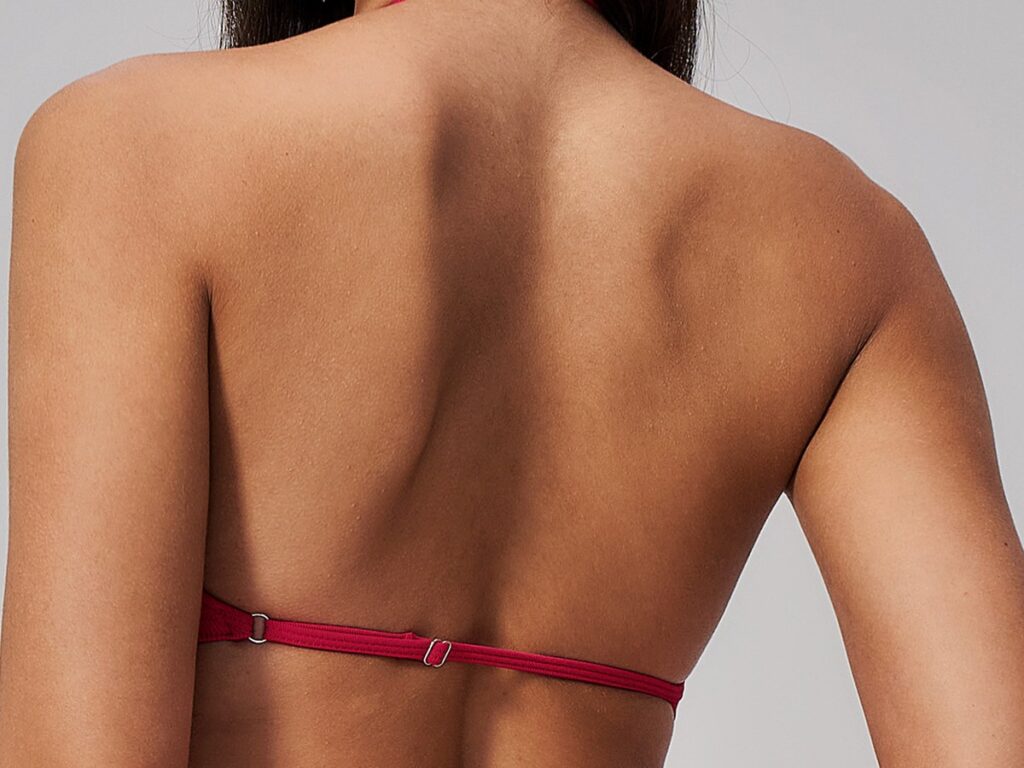
Use the confirmed product-detail reference when a hero image and a construction photo differ. Record the intended structure in the technical brief.

Approve Outer Fabric and Components Together
Stretch and recovery, lining, elastic and cup components interact. Confirm the actual material codes and review them as an assembled garment.
State whether cups are removable, fixed or omitted, and how openings or attachment are constructed. Review the reverse side and skin-contact finishing. A material swatch can support selection, but it cannot establish the support of the finished bra.

Use a Structured Sample Review
- Identify the sample, size, material and specification version.
- Check measurements using the agreed method.
- Review band position, coverage, strap pressure and comfort during the intended activity.
- Record observations across the sizes and wearer references agreed for the project.
- Recheck the garment after the defined care procedure where required.
Keep comments specific: where movement, pressure or exposure occurs, under which activity, and what change is requested. Do not convert a single subjective fit comment into a universal performance claim.
Separate Design Language From Verified Claims
If the range will use an impact or support rating, define the claim, assessment method, sample coverage and acceptance criteria with the appropriate product or testing specialists. Record the result for the garment actually assessed.
Do not reuse a rating from a different material, size range or construction without checking its applicability. This guide does not make medical or injury-prevention claims.

Confirm the Branded and Coordinated Version
- Recheck logo placement and application in the garment’s stretch zones.
- Review label position and reverse-side comfort.
- Approve bra and matching-bottom colours together.
- Confirm size allocation and whether sets can mix top and bottom sizes.
- Keep the final sample and product-file version for bulk checks.
Use the logo guide and quality checklist for the production handoff.
Buyer Questions
Does a racerback or halter shape prove high support?
No. The complete fit, materials and construction must be assessed against the intended use. A back shape is a design feature, not a verified rating.
Can I approve one size for all customers?
One sample does not establish fit across a whole size range. Agree grading and representative size or wearer review for your intended market.
Can MIQI develop from my existing bra?
A reference garment can start a discussion. Confirm the desired changes, size range, material, component construction and sample-review requirements before approval.
RELATED PRODUCT DIRECTIONS
Explore Styles for Your Brief.
Use these styles as starting points. Fabric, fit and branding are developed for your project.
Your Next Step
Review the confirmed adjustable-strap product direction, prepare the construction and measurement brief and request a development review for your intended activity.