
A logo method must suit the actual stretch fabric, garment position and brand artwork. The same application can behave differently on another surface or in a high-tension area. Compare a physical trial on the intended material before approving bulk branding.
Choose by substrate, placement, artwork and intended care, then approve appearance, stretch behaviour and wash performance using agreed checks. A method name alone does not guarantee durability or suitability.
Start With the Application Brief
- Provide vector artwork where available, dimensions and colour references.
- Mark placement from a seam or other repeatable garment reference.
- Identify the exact fabric, surface finish, colour and any lining.
- State whether the area stretches significantly during wear.
- Define hand-feel, skin-contact and care requirements.
A screen mock-up confirms visual direction only. It does not approve adhesion, garment distortion or production tolerances.
Heat Transfer and Printed Applications
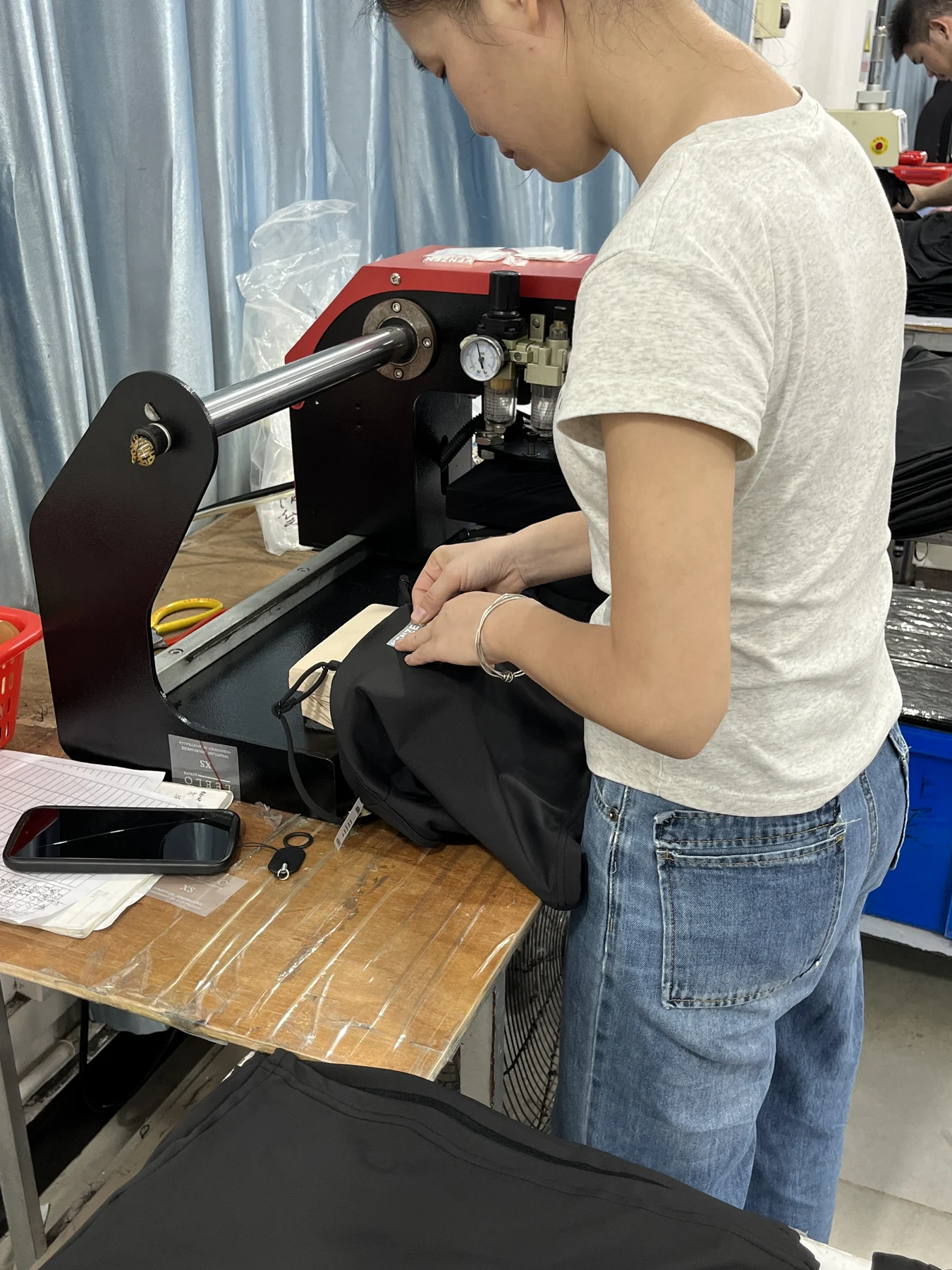
Transfer applications can reproduce detailed graphics with a relatively smooth profile, depending on the system. Ask the supplier which transfer, adhesive and process are compatible with the selected stretch material.
- Review stretch and return without visible cracking or lifting under the agreed conditions.
- Check colour, edge finish and any show-through or colour migration.
- Assess whether application heat affects the fabric or leaves a visible mark.
- Approve the actual size and position on a garment, not just on a loose swatch.
Silicone and Raised Effects
A raised effect can add dimension, but thickness, edge shape, flexibility and placement affect the result. Confirm whether the proposal is a transfer, direct application, badge or another construction; the word “silicone” does not describe the full process.
Review flexibility and the edge bond on the intended material. In an area that stretches or rubs against skin, assess pressure, bulk and comfort. Keep a physical approved reference for the production finish.
Embroidery, Woven Labels and Badges
Embroidery adds thread and stabilizing requirements. On lightweight stretch fabrics, assess distortion, stiffness, puckering and the reverse side. A small logo can still affect comfort in a close-fitting garment.
Woven labels and badges introduce an attachment method and edge finish. Confirm seam position, visibility, size and skin contact. A label near a seam may be practical, but the actual construction must be reviewed on the sample.

Compare Trials Under the Same Conditions
- Use the same intended fabric and colour for each candidate application.
- Confirm artwork version, size, position and process before making trials.
- Inspect the relaxed garment and its expected movement or stretch.
- Use the agreed laundering and assessment procedure; record appearance and any change.
- Approve one physical reference and define acceptable placement and appearance variation.
Do not publish “wash-proof” or unlimited durability claims without evidence for the exact material and application. A sample trial is evidence for that trial, not every future combination.

Carry the Approval Into Bulk
- Record the approved artwork file, colour and finished dimensions.
- State the placement measurement and allowed tolerance.
- Keep the approved branded swatch or garment and process reference.
- Require review if the fabric, finish, logo supplier or process changes.
- Include branding appearance and placement in the final inspection plan.
See the quality-control checklist for the handoff into production.
Buyer Questions
Which method is best for leggings?
There is no universal answer. The intended material, artwork, position and movement determine the trial. A waistband logo and a large thigh graphic may require different solutions.
Can I approve the logo from a photo?
A photo can confirm visual direction, but it cannot establish hand feel, adhesion, skin comfort or wash behaviour. Request a physical trial where those properties matter.
Can the same logo be used across a matching set?
The artwork may be shared, but different fabrics or garment positions can need separate application trials and colour review.
RELATED PRODUCT DIRECTIONS
Explore Styles for Your Brief.
Use these styles as starting points. Fabric, fit and branding are developed for your project.
Your Next Step
Review logo and branding options, select the relevant product direction and send your artwork for an application review. Include dimensions, placement and the intended fabric.